
Last updated October 16, 2026
 Water damage drying
 Fire & smoke cleanup
 Mold remediation
 Storm response
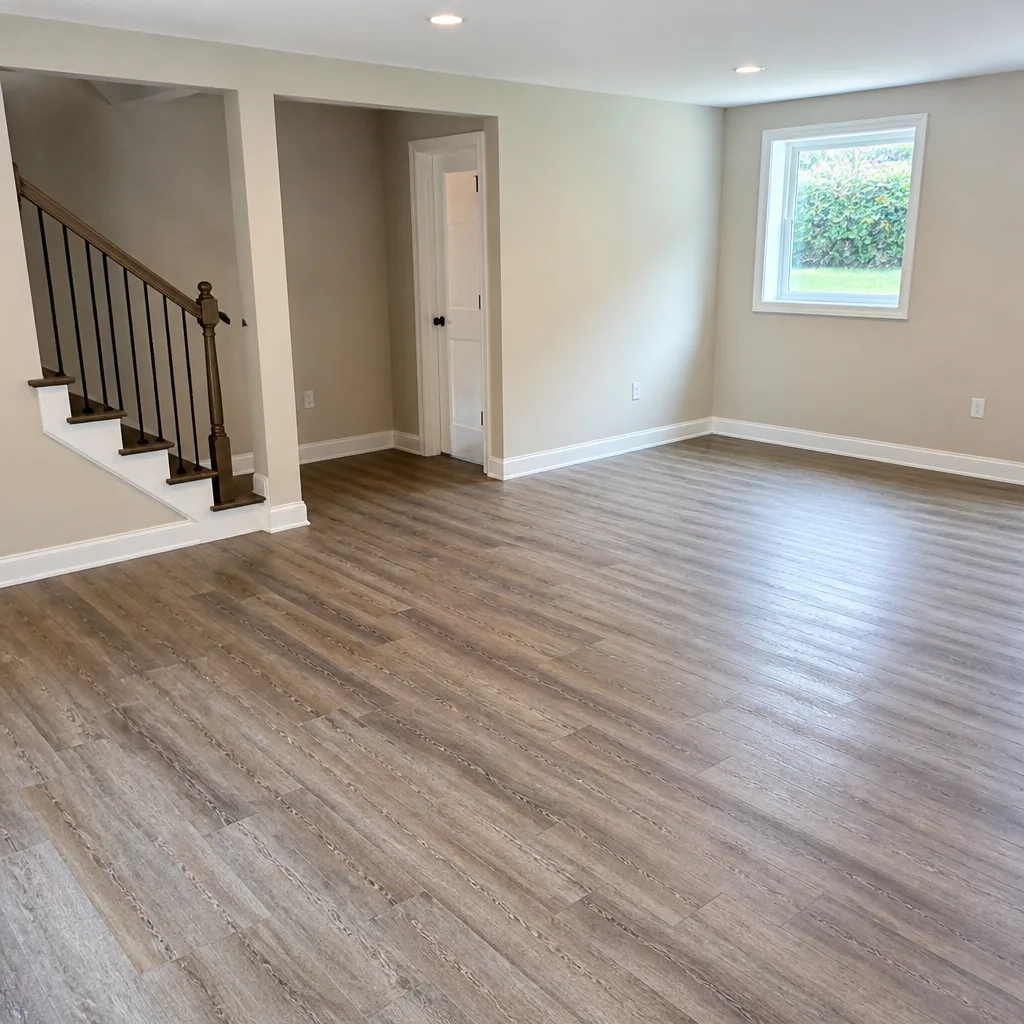 Sewage cleanup
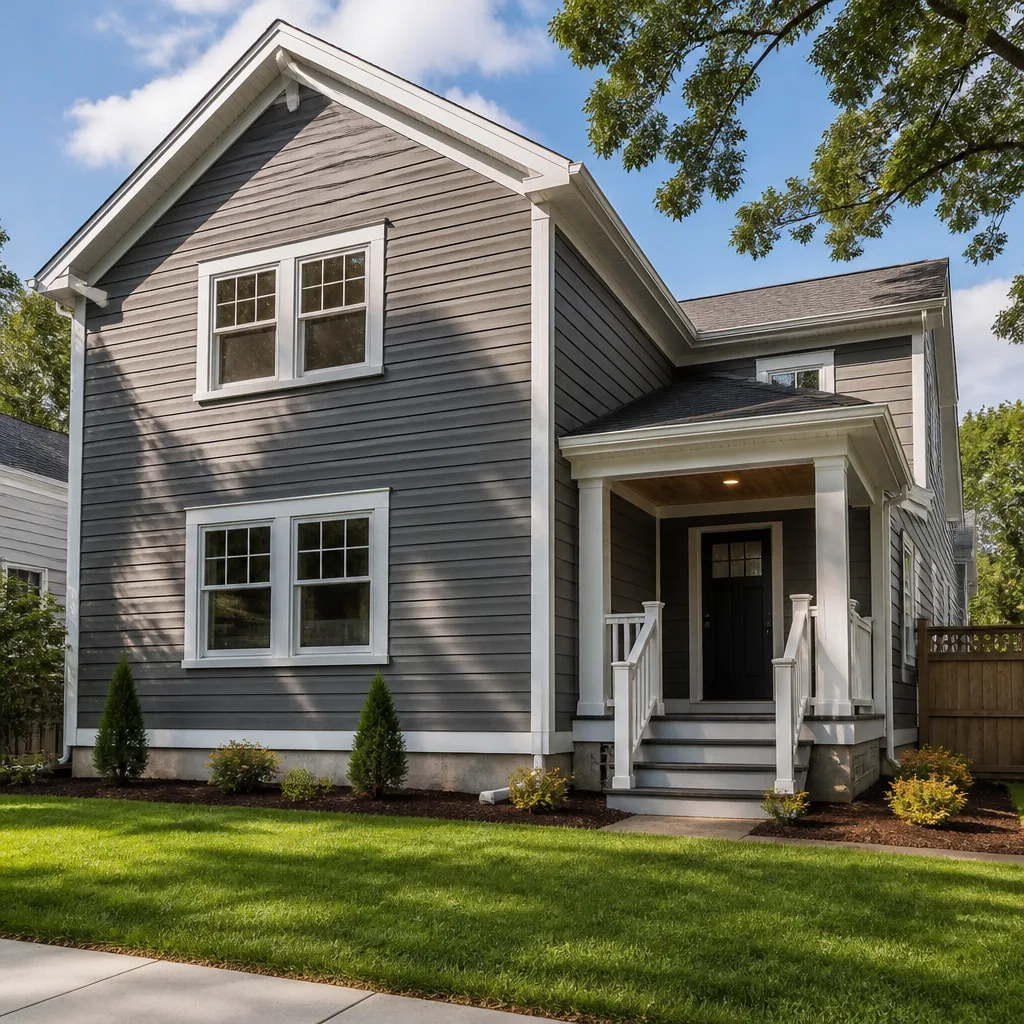 Reconstruction
Free visual inspection and a written scope of work before any mitigation begins - photos, moisture readings, and drying logs go in your claim file
The scope we write is the scope we bill. Anything new gets shown to you, in writing, before we touch it.
Get your free estimateThe Complete Guide to Damage Restoration in Tampa
In Tampa’s average summer humidity of 90%+, mold colonies can establish inside wall cavities within 48 hours of a water intrusion, yet most “complete guides” to restoration were written for dry climates and skip this window entirely. That gap is why we wrote this guide. You’ll learn how Tampa’s climate compresses every restoration timeline, what the three distinct phases of damage work actually involve, how Florida’s insurance environment shapes your claim, and what a disciplined restoration company should put in writing before anyone touches your home.
Quick Answer
Damage restoration in Tampa typically involves three phases: mitigation (stopping active damage), remediation (removing contaminated materials), and reconstruction (rebuilding what was removed). In Tampa’s subtropical climate, secondary damage like mold moves fast, which means the most important decision you make is who you call in the first 24 hours. A qualified company will put a written price in front of you before work begins and document every moisture reading to support your insurance claim.
Restoration work we handle
Table of Contents
- Why Tampa Is a Different Animal
- Mitigation, Remediation, and Reconstruction: Three Separate Jobs
- Tampa’s Secondary Damage Timeline: Hour by Hour
- Slab-on-Grade Construction and What It Means for Drying
- Insurance in Florida: Citizens, AOB, and Who Controls the Claim
- What a Written Standard Looks Like in Practice
- How to Vet a Tampa Restoration Contractor
- Why Equipment and Documentation Matter More Than Promises
Why Tampa Is a Different Animal
Tampa is not Miami, and it’s not Orlando. It sits on a peninsula between two bodies of water, Tampa Bay and the Gulf of Mexico, which means moisture is always in the air, not just during hurricane season. The city’s building stock is older than most people realize. Drive through Seminole Heights, Riverside Heights, or Palma Ceia and you’ll see wood-frame homes from the 1920s and 1930s sitting on pier foundations or slabs. Drive through Westchase or New Tampa and you’ll find 1990s and 2000s construction that was built to code at the time but still uses materials that don’t love standing water.
The combination matters. A water intrusion in a dry climate might mean you run fans for two days and call it done. In Tampa, the same intrusion in July can introduce enough moisture for mold spores, which are present in every Florida home, to germinate inside a wall cavity before you’ve even finished calling your insurance agent. We’ve walked into homes in Carrollwood where a slow toilet supply leak had been running behind a vanity for three weeks, and the remediation required removing drywall 4 feet up the wall because the moisture had wicked that far. Dry climates don’t do that.
Hurricane exposure adds another layer. Tampa Bay hasn’t taken a direct hit in over a century, but the near misses, from Irma in 2017 to Ian in 2022, taught every homeowner in the region what storm surge and wind-driven rain can do. Floodwater is not clean water. When the Alafia River or the Hillsborough River overflows, or when a storm drain backs up in South Tampa, the water carries sewage, fuel, and whatever else is in the street. That changes the restoration protocol completely. You’re no longer drying a leak. You’re remediating a biohazard.
The insurance environment here is volatile, too. Florida’s property insurance market has been in crisis for years. Private carriers have pulled out or gone insolvent, and Citizens Property Insurance Corporation, the state-backed insurer of last resort, has become the largest property insurer in the state. That means a significant number of Tampa homeowners are navigating claims with a policy they barely understand and an adjuster who may not be local. For more on what to watch for, see our Damage Restoration Warning Signs: A Tampa Homeowner’s Reference Guide. The short version is this: the more documentation you have, the less friction you’ll face.
What does all of this mean for a homeowner? It means the national-average advice about restoration, the advice you’ll find on generic home improvement sites, doesn’t apply cleanly here. Tampa demands a local understanding of moisture, construction methods, and insurance dynamics. The rest of this guide is built around that understanding. For more on water-specific damage, start with our Water Damage Restoration in Tampa page.
Mitigation, Remediation, and Reconstruction: Three Separate Jobs
Most homeowners use “restoration” as a catch-all term. The industry doesn’t. There are three distinct phases, and they have different goals, different equipment, different pricing structures, and different timelines. A contractor who lumps them all into one line item on an estimate is either cutting corners or doesn’t understand the work. Either way, that should give you pause.
Mitigation is emergency response. Its goal is to stop the damage from getting worse. When water is actively flowing from a burst pipe or a roof breach, mitigation means shutting off the source, extracting standing water, and setting up drying equipment. In Tampa’s climate, mitigation is a race. Every hour that water sits in a structure is another hour of wicking, another hour of humidity building inside the building envelope, another hour closer to mold germination. Mitigation pricing is typically based on the scope of the affected area, the category of water, and the equipment required.
Remediation is the removal of contaminated or damaged materials. This is where drywall gets cut out, carpet gets pulled, insulation gets bagged and disposed of. Remediation is most commonly associated with mold, but it applies to any material that cannot be salvaged, including drywall that’s been soaked with Category 3 water, which is water containing sewage or other contaminants. The goal of remediation is not to clean the material. The goal is to remove it so the structure can be rebuilt. In Tampa, homes built before 1978 may have lead paint, and homes built before the mid-1980s may have asbestos in drywall compound or floor tiles. Remediation contractors need to know how to handle both, and they should tell you before they start cutting.
Reconstruction is the rebuild. New drywall, new flooring, new trim, new paint. This is the phase that looks like a remodel, and it’s priced and scheduled like one. You don’t rush reconstruction. You don’t promise same-day reconstruction. You scope it, price it in writing, and schedule it. In Tampa, reconstruction also has to meet current building code, which may be stricter than the code that was in place when your home was built. That can mean upgrading from single-pane windows to impact-rated windows if you’re doing major work, which your insurance policy may or may not cover.
The red flag, again, is bundling. A contractor who says “we’ll handle everything for $18,000” without breaking out what’s mitigation, what’s remediation, and what’s reconstruction, is asking you to sign away your ability to understand what you’re paying for. Insurance adjusters expect line-item breakdowns. A good restoration company provides them.
Tampa’s Secondary Damage Timeline: Hour by Hour
Secondary damage is the damage that happens after the initial event. The water that soaked into subflooring. The humidity that climbed inside wall cavities. The mold that started growing in the dark. In Tampa’s climate, secondary damage moves on a faster clock than in most of the country. Here’s what we typically see, based on the conditions that prevail here from roughly May through October:
- Hours 0 – 4: Water saturates porous materials: drywall, carpet padding, wood subfloor, baseboards. If the water source is clean, like a supply line, the materials may be salvageable with fast extraction and aggressive drying. If the water is from outside, like storm water or sewage backup, assume contamination.
- Hours 4 – 12: Humidity inside the affected area begins to climb. In a Tampa summer, where the outdoor dew point is often in the mid-70s, the indoor relative humidity in an affected room can reach 80% or higher even with air conditioning running. Drywall starts to wick moisture upward from the base.
- Hours 12 – 24: Materials that can’t be dried, like carpet padding, are saturated. Wood flooring begins to cup or crown. That’s the visible warp you see when boards start to push up at the edges. At this stage, the water is no longer just on surfaces. It’s inside the building assembly.
- Hours 24 – 48: Mold germination begins. In Tampa’s summer conditions, mold spores can start to colonize wet drywall, insulation, and wood within 36 to 48 hours. This is the window where remediation shifts from “dry it” to “cut it out.” Every hour that passes is increasing the likelihood that materials must be removed rather than saved.
- Hours 48 – 72: Odor becomes noticeable. That musty smell is microbial growth. Structural wood that’s been wet for three days is also at risk of fungal degradation. In pier-and-beam homes, which are common in older Tampa neighborhoods, floor joists can begin to degrade. That’s a structural issue, not just a cosmetic one.
- 72+ hours: Secondary damage is now the primary problem. The original leak may be fixed, but the moisture it left behind has created a new set of problems: mold colonies, compromised drywall, swollen subfloor, maybe damaged framing. This is where restoration costs escalate significantly, and where the difference between early intervention and delayed response is measured in thousands of dollars.
The takeaway isn’t subtle. In Tampa, you have less time than the national-average guides suggest. A homeowner who waits a week to address a water intrusion in January might get away with it. The same homeowner who waits a week in August is looking at mold remediation.
Slab-on-Grade Construction and What It Means for Drying
Most Tampa homes are built on slab-on-grade foundations. There’s no basement and no crawlspace. That changes the drying protocol in ways that even experienced restoration contractors from other regions sometimes misunderstand.
When a home has a crawlspace, water that reaches the subfloor can be dried from below. You set up drying equipment in the crawlspace, direct air at the underside of the floor, and the moisture has a path to escape. When a home is on a slab, there is no underside access. The concrete slab itself can absorb and hold moisture, and any water trapped between the slab and the flooring material above it, whether that’s tile, carpet, or vinyl plank, has nowhere to go unless the flooring is removed.
This is why you’ll often see restoration crews in Tampa removing flooring that a homeowner thought could be saved. It’s not because the crew is padding the bill. It’s because water trapped under vinyl plank or sheet vinyl on a slab will sit there indefinitely. The vinyl is non-permeable, so the moisture can’t evaporate upward. It just sits and feeds microbial growth. The same is true for carpet over pad on slab. The pad acts like a sponge, and the slab below prevents downward drainage. The carpet may feel dry on top after extraction, but the pad underneath is holding gallons of water.
Concrete slabs are also slow to release moisture. Even after extraction and dehumidification, a slab that’s absorbed water can keep releasing moisture vapor for weeks. A good restoration company will use moisture meters to monitor the slab’s moisture content and compare it to the unaffected areas of the home. We use the same equipment referenced in our Mold Remediation in Tampa work, because the drying standard determines what gets rebuilt and what doesn’t.
There’s also a code consideration. Tampa’s building code requires a vapor barrier under the slab, but older homes may not have one, or the barrier may have degraded over time. That means moisture from the soil can migrate upward through the slab even without a water event. During Tampa’s rainy season, from June through September, the water table rises, and slab moisture increases. This shows up as efflorescence, which is that white chalky powder on the concrete, or as persistent musty odor in a room that has no obvious leak. Understanding this helps you understand why a moisture reading matters.
Insurance in Florida: Citizens, AOB, and Who Controls the Claim
If you’re a Tampa homeowner, you’re likely insured through one of three channels: a private carrier like State Farm or Universal, Citizens Property Insurance, or a surplus lines carrier if your home couldn’t get coverage elsewhere. Each channel works differently, but all of them are bound by Florida’s insurance statutes, which are unique in the country. Understanding them will save you headaches later.
Assignment of Benefits (AOB) is the Florida-specific mechanism that lets a homeowner sign over their insurance claim rights to a contractor. The contractor then deals directly with the insurance company and gets paid directly. This was marketed for years as “we’ll handle everything, you don’t have to deal with your insurance.” The problem was that AOB agreements were widely abused by contractors who inflated claims, and insurance companies responded by denying or fighting AOB claims aggressively. Florida’s legislature restricted AOB in 2019 and 2022, and the result is that most honest restoration companies, including us, no longer use AOB at all. We work for you, not as your insurance surrogate, and you stay in control of your claim.
Citizens Property Insurance is now the largest property insurer in Florida, and a huge share of Tampa homeowners are with Citizens. Citizens policies are written to state-mandated standards, and the claims process is, in our experience, slower and more bureaucratic than private carriers. That doesn’t mean your claim isn’t covered. It means the adjuster may take longer to show up, and the documentation requirements may be more stringent. This is where a restoration company that documents everything, from initial moisture readings to daily drying logs to photo documentation of every cut, becomes your ally. The more complete the file, the less room the carrier has to push back.
You’ll also encounter the term scope of loss in Florida claims. This is the written document that describes the full extent of the damage and the work required to restore it. In a dispute, the scope of loss is the foundation of any legal claim. A restoration company that can produce a precise, defensible scope of loss, line by line, is giving you leverage. A contractor who says “we’ll figure it out as we go” is leaving you exposed.
Flood insurance is a separate policy. Standard homeowners policies don’t cover rising water. If you have flood insurance through NFIP, which most Tampa homeowners in flood zones do, that claim is handled separately from your homeowners claim. The damage mitigation, which is what you need immediately, is the same regardless of which policy covers it. But you’ll need to coordinate with two adjusters, and your restoration contractor should know how to support both claims with consistent documentation.
What a Written Standard Looks Like in Practice
The Garrison Standard is the baseline we work to on every job we touch in Tampa. It’s not a marketing slogan. It’s a checklist. A discipline. And we believe it’s what separates restoration companies that respect your home from companies that treat your emergency as leverage.
Written price before any work starts. This is the non-negotiable. Before a technician touches a wall, removes a baseboard, or even sets up a fan, you receive a written scope of work with a price attached. That price doesn’t move at the door. It doesn’t grow when the crew arrives. It doesn’t get amended because “we found more damage” unless that additional damage is documented, explained, and approved by you in writing before the additional work proceeds. This is the single most effective protection against contractor abuse in this industry.
Documented moisture readings. Drying is a science, not a vibe. A professional restoration company in Tampa records moisture readings from affected areas and unaffected control areas before work begins, during the drying process, and at the end of the job. Those readings tell you, and your insurance carrier, whether the drying protocol actually worked. The industry standard for dry structural wood is typically below 16% moisture content. A company that doesn’t take these readings, or can’t show them to you, is guessing.
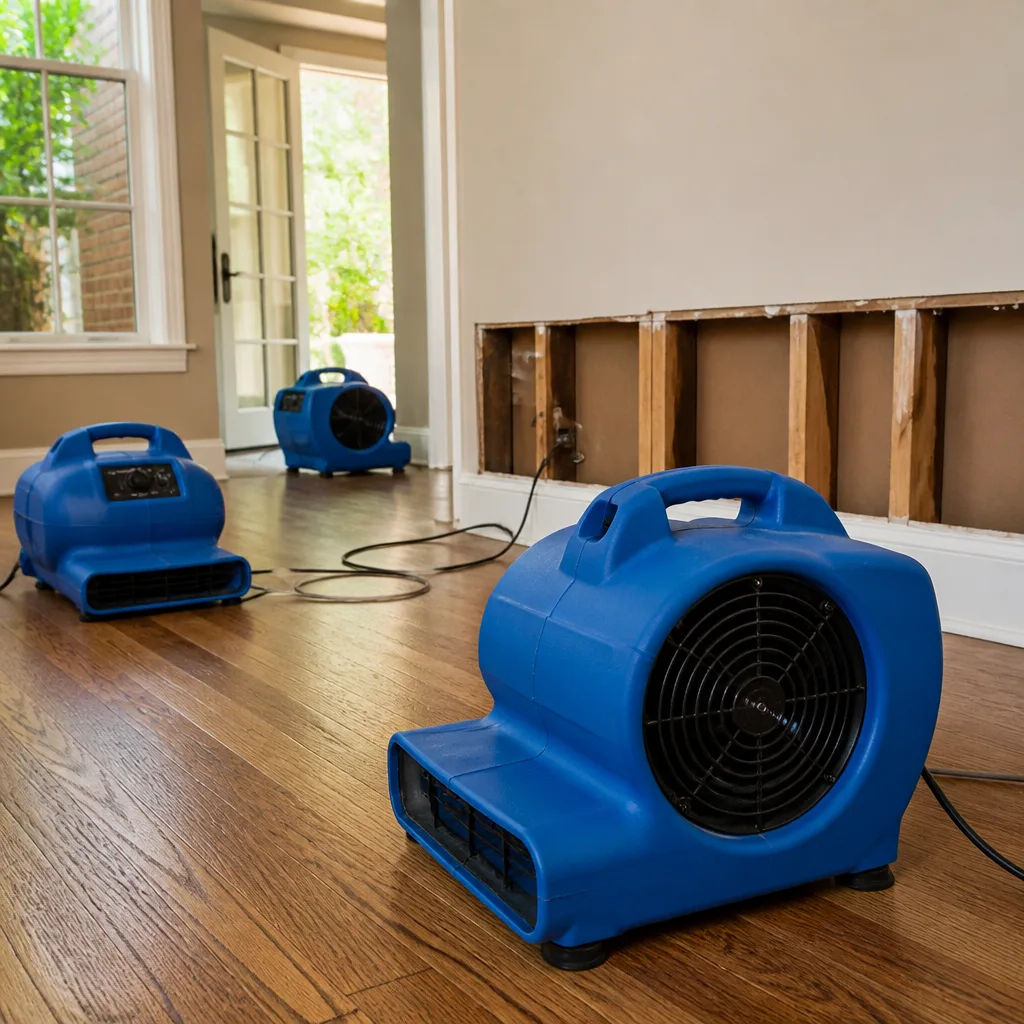
Equipment that works to specification. Restoration drying equipment is not the same thing as the fan you bought at Home Depot. Commercial air movers, desiccant dehumidifiers, and low-grain refrigerant dehumidifiers from manufacturers like Dri-Eaz are designed to remove moisture at rates that retail equipment can’t approach. In Tampa’s humidity, where outdoor air is already saturated for much of the year, you can’t dry a structure by opening windows. You need mechanical dehumidification, and you need enough of it. A restoration company that shows up with two box fans and a prayer is not going to dry your home.
Full-year written guarantee. The 365-Day Done Right Promise is simple. If the repair fails within one year, we return and make it right at no charge. This applies to the reconstruction work, not to new damage that happens later. It’s a written commitment, not a verbal assurance. If a contractor won’t put their guarantee in writing, ask yourself why.
You can read more about this standard on our Keegan Restoration Tampa home page, but the point here is that “restoration” is not a word you should accept on faith. It should come with a paper trail.
How to Vet a Tampa Restoration Contractor
When your home is actively leaking, your instinct is to call the first number that shows up on Google and get someone there fast. That instinct is understandable. It’s also how homeowners end up with contractors who no-show, move the price at the door, or leave the site in worse shape than they found it. Here’s a vetting process that takes ten minutes and saves you from all three.
- Does a live person answer the phone? Call at an inconvenient time. A Tuesday at 2pm is fine, but try a Sunday evening or a holiday. At Keegan, a live person answers our phones 24 hours a day, 7 days a week, including nights, weekends, and holidays. If you get a phone tree that dumps you into voicemail, that’s not a restoration company ready for emergencies.
- Will they give you a price before anyone shows up? No one can scope a job accurately without seeing it, but a serious company will describe their pricing model on the phone and commit to a written scope before work begins. If they refuse to talk price until someone is standing in your living room, be skeptical.
- Are their technicians background-checked and uniformed? You’re letting strangers into your home during a crisis. A company that screens its employees and sends them in identifiable uniforms is signaling that it treats this work as a profession, not a gig.
- Do they work in compliance with industry standards? The IICRC sets the standards for water damage restoration and mold remediation. Companies that follow IICRC standards, and that train their crews to those standards, are operating from a defined protocol. Companies that don’t are improvising. The RIA and IFA have additional standards for fire restoration and forensic work.
- What does their past work look like? Ask for references from Tampa jobs similar to yours. Not from three years ago. From last month. A company that does good work in this market will have recent references in neighborhoods like yours.
Once you’ve vetted a company, the next step is to let them document the damage properly. That means photos. That means moisture readings. That means an inventory of affected materials. This documentation matters for your insurance claim, and it matters for your own understanding of what’s actually wrong.
Why Equipment and Documentation Matter More Than Promises
Every restoration company will tell you they do quality work. Almost none of them will show you the equipment list before you ask. But the equipment is the work. A water damage restoration job in Tampa is only as good as the machines that dry the structure, and the documentation that proves the structure is actually dry.
We run Dri-Eaz, Phoenix, XPOWER, B-Air, and Injectidry equipment. Those are the professional-grade brands used in IICRC-standard restoration work. A Dri-Eaz dehumidifier pulls moisture out of the air at a rate that retail dehumidifiers can’t approach. Phoenix air movers move air across wet surfaces at velocity and volume that accelerates evaporation. XPOWER and B-Air provide additional drying capacity for large losses. Injectidry systems are used for specialty drying, like hardwood floors where you’re trying to save the floor rather than replace it.
Why does this matter to you? Because in Tampa’s climate, incomplete drying is a guarantee of future problems. A contractor who underdeploys equipment to save money on the job will leave you with a structure that looks dry but isn’t. Six months later, you’ll smell it. Or see it. Or both. Good equipment, deployed in adequate quantities and monitored daily, is the difference between a repair that lasts and a repair that turns into a mold problem.
Documentation is the other half. Psychrometrics is the science of measuring moisture in air and materials. A restoration company that understands psychrometrics will take measurements before, during, and after drying. They’ll record those measurements. They’ll show them to you. They’ll provide them to your adjuster. This is what “documented to support your claim” means in practice. It’s not a favor. It’s a baseline.
For fire damage specifically, the equipment and documentation needs shift. Fire restoration involves smoke and soot removal, odor control, and often structural cleaning. The Fire Damage Restoration in Tampa page covers that process in more detail, but the principle is the same: the work should be done to a defined standard, and the evidence of that work should be in writing.
Common Mistakes to Avoid
- Waiting to call because “it’s just a little water.” In Tampa’s humidity, there’s no such thing. Small leaks become full remediation jobs faster here than in any dry-climate city.
- Signing an AOB without understanding it. You’re signing over control of your insurance claim. Read it. Ask questions. In most cases, a reputable company won’t ask you to sign one.
- Accepting a verbal quote. If the price isn’t in writing before work starts, it isn’t a price. It’s an opening position.
- Letting a contractor use retail fans to “dry things out.” Box fans and open windows don’t dry structures in Tampa. They just move humid air around. You need mechanical dehumidification.
- Skipping the documentation. No photos, no moisture readings, no written scope. That’s a recipe for an insurance denial and no recourse.
- Hiring someone who isn’t familiar with Tampa construction. Slab-on-grade homes, older wood-frame structures, and hurricane-impacted building codes are all local factors. A contractor who doesn’t know Tampa doesn’t know your house.
- Assuming your standard policy covers everything. Flood damage from storm surge or river overflow requires separate flood insurance. Mold remediation is often capped or excluded. Know your policy before you need it.
See the difference
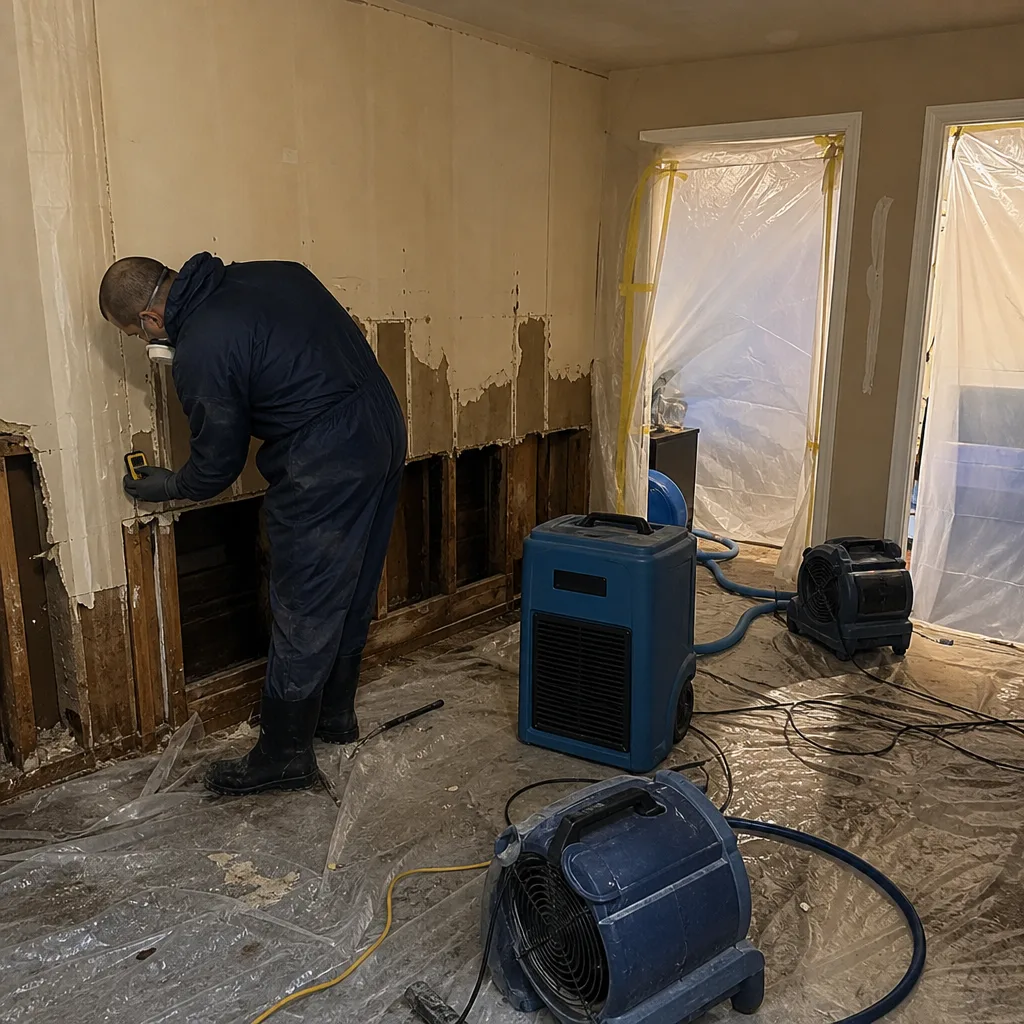 Before
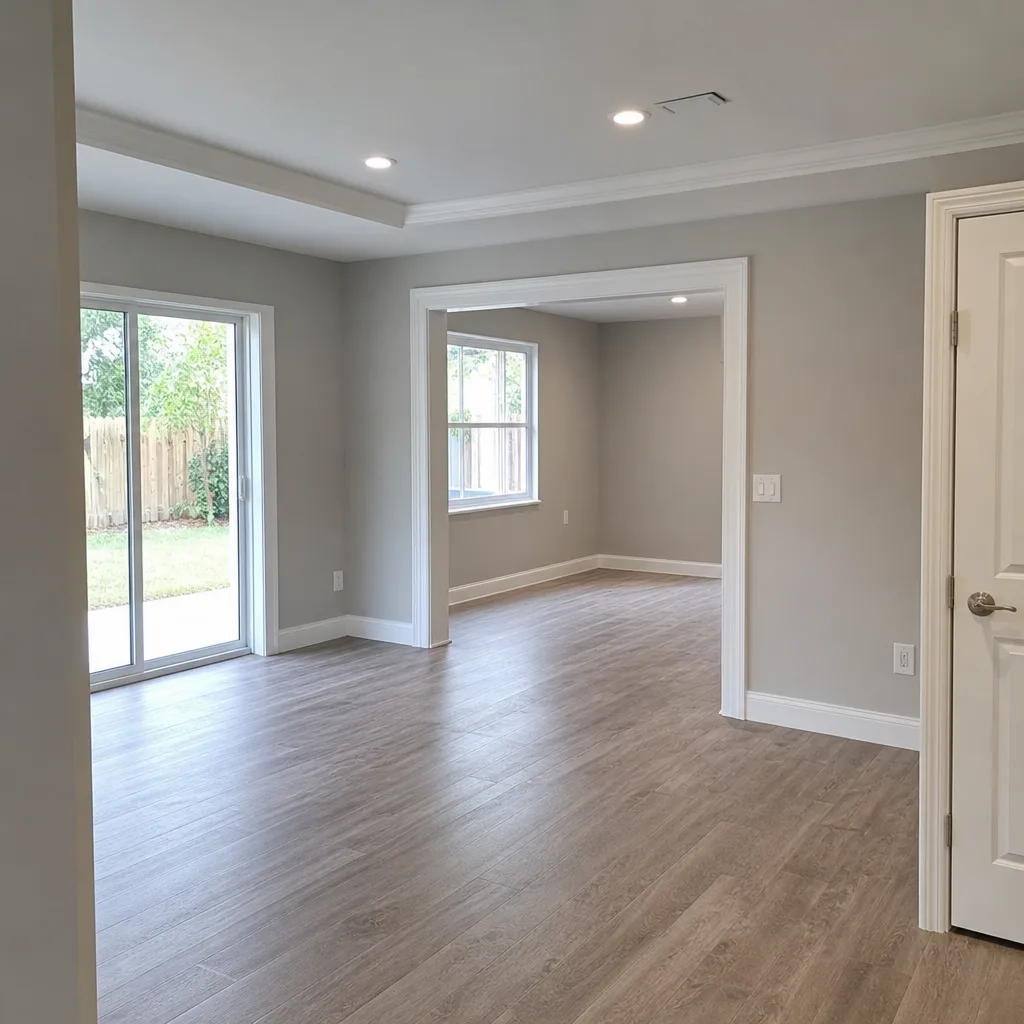 After
After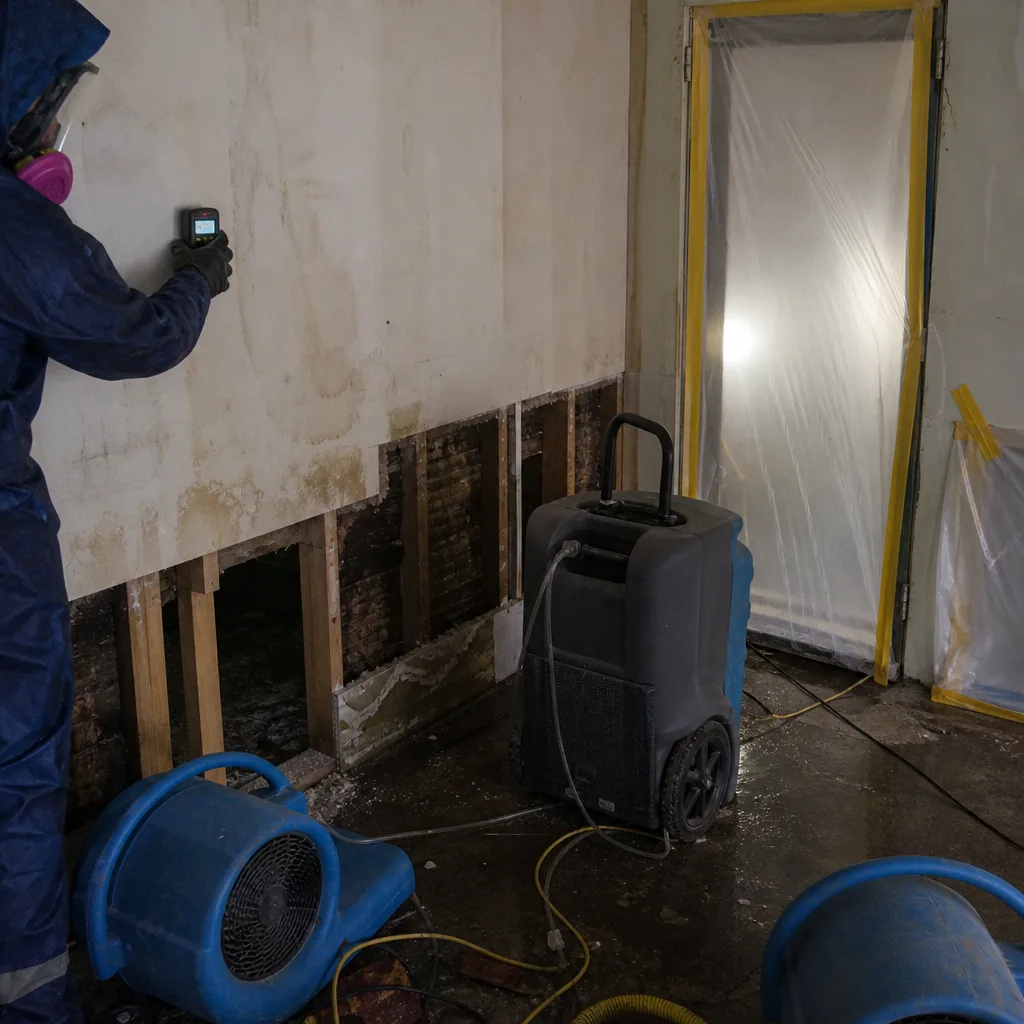 Before
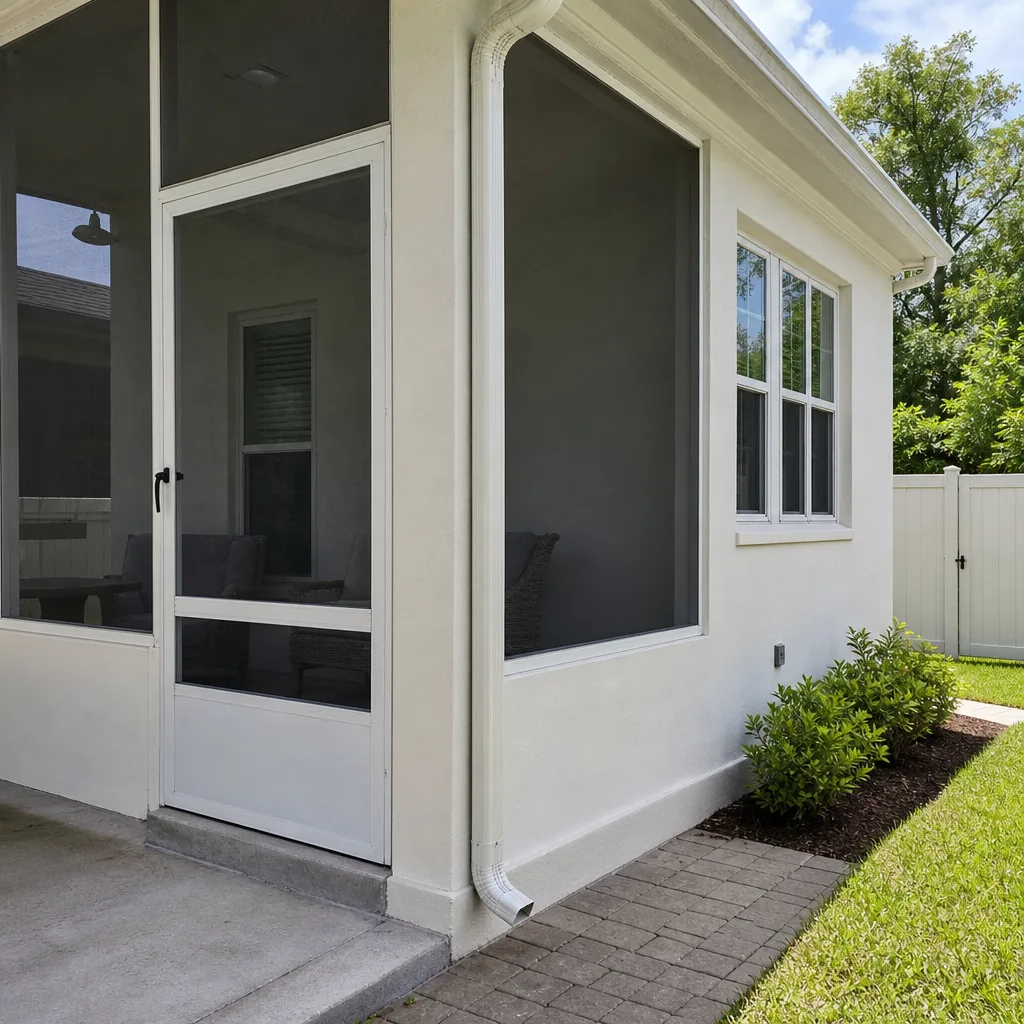 After
After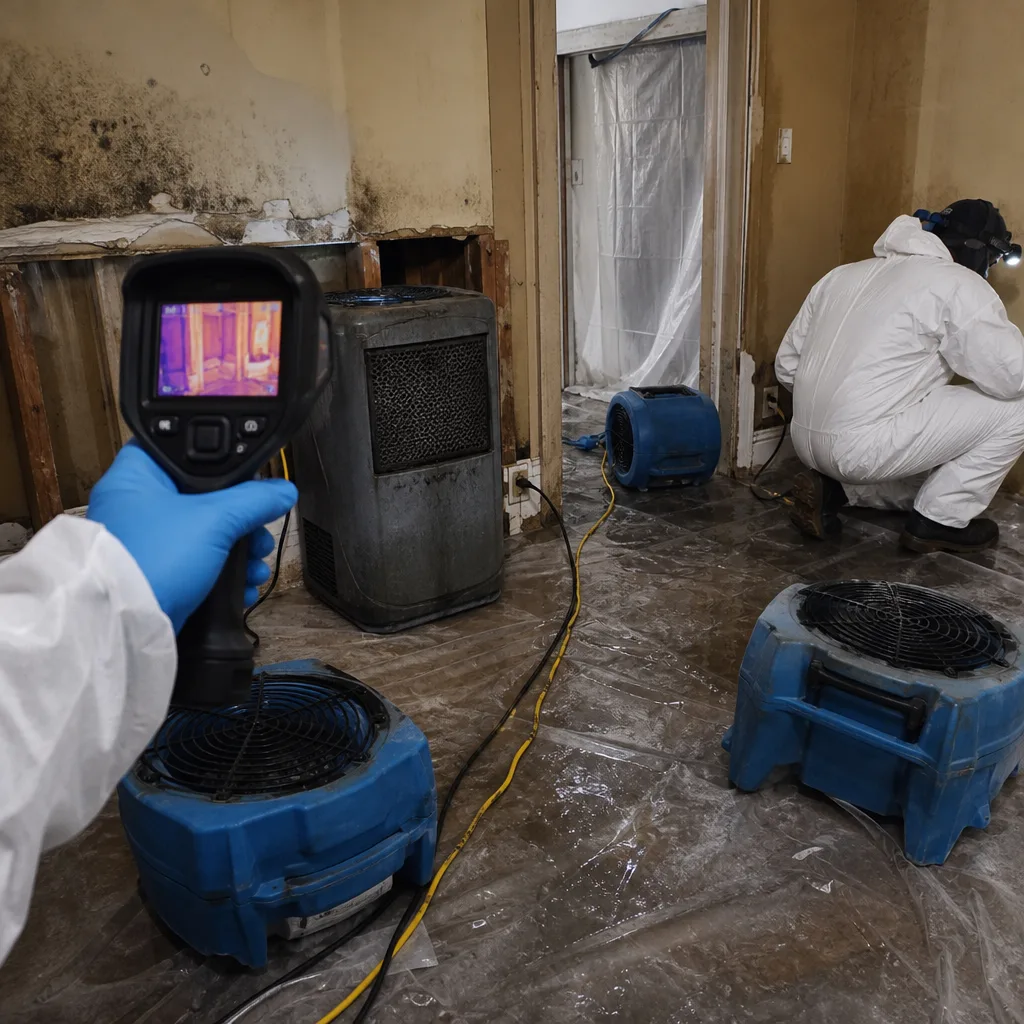 Before
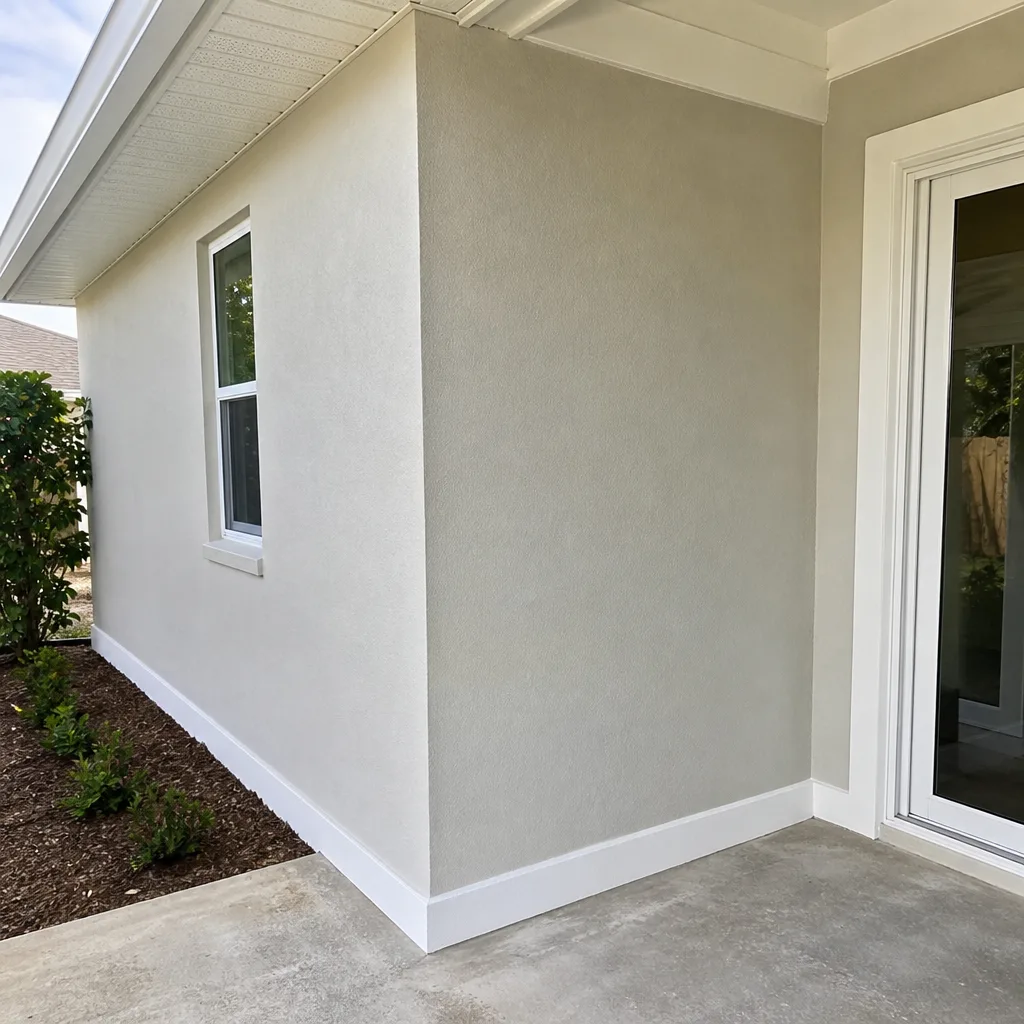 After
AfterWhen to Call a Professional
Call a professional when water is actively flowing and you can’t find or reach the shutoff. Call when water has been sitting for more than an hour in a room with drywall, wood flooring, or carpet. Call when you smell something musty and you can’t identify the source. Call when your ceiling is sagging from water weight. Call when a storm has left standing water in your home. Call when you see visible mold, even if it’s just a small patch. Call when you’ve had a fire and smoke has moved through rooms that weren’t burned. Keegan Restoration Tampa offers free estimates in Tampa, call (850) 367-1316.
Frequently Asked Questions
Mold can start growing within 24 to 48 hours in Tampa’s summer climate, when indoor humidity is high and temperatures are warm. This is faster than the 48 to 72 hour timeline you’ll see in national guides, which assume drier conditions. Call (850) 367-1316 immediately if water has been sitting for more than a few hours.
It depends on the source. Sudden and accidental water damage from a burst pipe is typically covered by a standard homeowners policy. Gradual leaks, like a slow supply line drip, are often excluded because the insurer considers it maintenance. Flood damage from storm surge or rising water requires a separate flood insurance policy. Always document everything and submit a detailed claim.
Water mitigation alone typically ranges from $1,500 to $5,000 for a single room, while full restoration including remediation and reconstruction can run from $5,000 to $30,000 or more depending on square footage, water category, and materials. For a detailed breakdown, see our Damage Restoration Cost Breakdown: The Tampa Homeowner’s Reference for 2026. Fire restoration is typically higher. Every job starts with a written scope and price before work begins. Call (850) 367-1316 for a free estimate on your specific situation.
Category 1 is clean water from a supply line or faucet. Category 2 is gray water, meaning it contains some contamination, like washing machine discharge or a sump pump failure. Category 3 is black water, meaning sewage, floodwater, or any water that has been sitting long enough to grow bacteria. Category 3 water requires full remediation and disposal of affected porous materials, not just drying.
Sometimes. Solid hardwood floors can often be saved with fast extraction and specialty drying, which is where Injectidry systems come in. Engineered wood and laminate are usually not salvageable, because the core materials swell and delaminate. The determining factor is how quickly the water is addressed. In Tampa’s humidity, a floor that sits wet for a week is a floor that’s coming out.
Mitigation usually takes 3 to 7 days, including drying time. Remediation can add several more days, depending on how much material must be removed. Reconstruction is the longest phase, typically 2 to 8 weeks depending on scope. Each phase has its own timeline and its own written scope. Quality work isn’t rushed, but the emergency phase, mitigation, should start immediately.
The Bottom Line
Damage restoration in Tampa is a different game than it is in most of the country. The humidity compresses your timeline. The slab foundations change the drying protocol. The insurance environment, with Citizens and AOB restrictions, puts a premium on documentation. The best thing you can do before disaster hits is understand these factors and know who you’ll call when water or fire touches your home. That company should put a price in writing before any work starts, show you moisture readings, run professional-grade equipment, and back their repairs with a written guarantee. If they won’t do those things, keep looking.
Written by Shane Pruitt, Owner at Keegan Restoration Tampa, serving Tampa since 2005.