
Last updated October 16, 2026
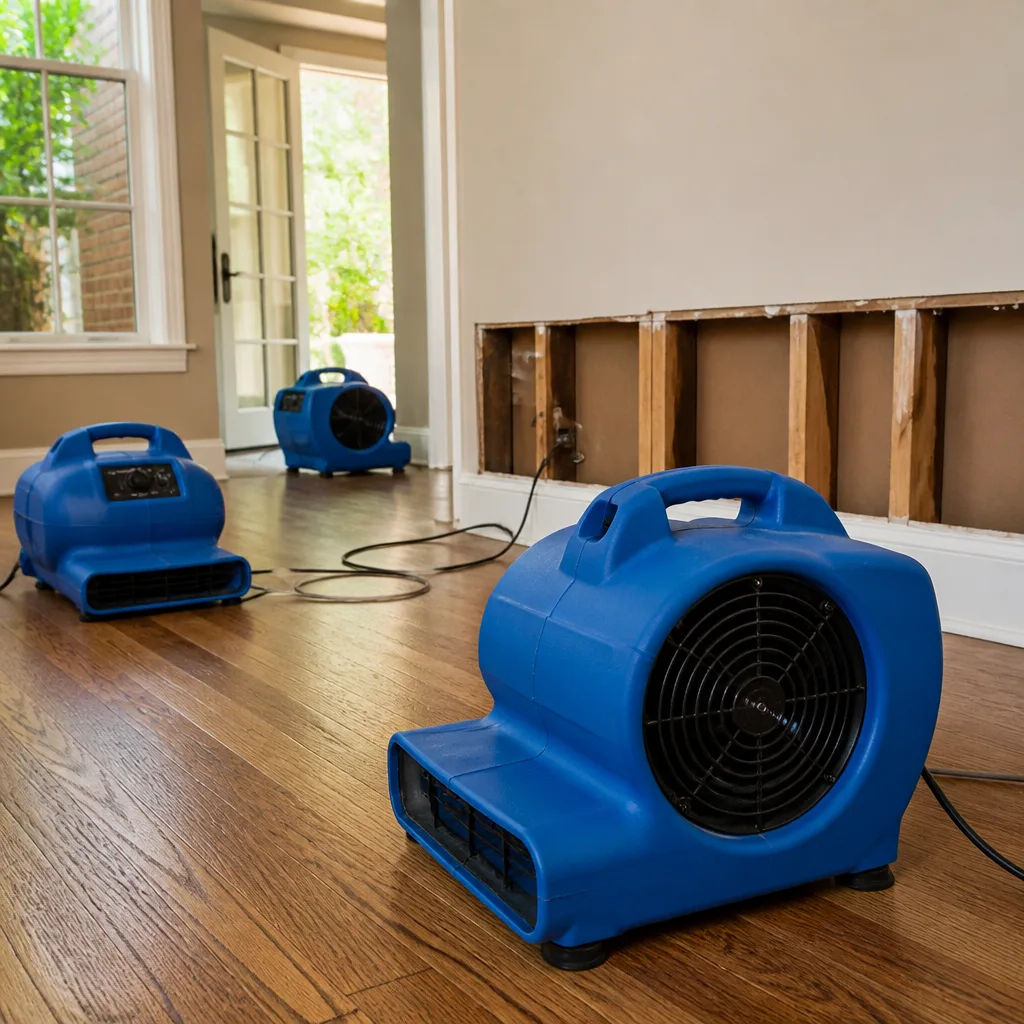 Water damage drying
 Fire & smoke cleanup
 Mold remediation
 Storm response
 Sewage cleanup
 Reconstruction
Free visual inspection and a written scope of work before any mitigation begins - photos, moisture readings, and drying logs go in your claim file
The scope we write is the scope we bill. Anything new gets shown to you, in writing, before we touch it.
Get your free estimateDamage Restoration Permits, Codes & Inspections in FL: What You Need to Know
An unpermitted roof repair after water damage doesn’t just void your next homeowner’s insurance claim. In Florida, it can legally block you from selling the property until the work is retroactively inspected and brought to code, a process that can cost more than the original repair. This guide explains exactly when a permit is required for restoration work, how Florida’s post-Hurricane Ian building code changes affect Tampa homeowners, and how to verify that work on your home was done legally. We’ll cover Hillsborough County’s specific thresholds, the 50% rule that catches people in flood zones, and the documentation trail that protects you when you sell or file a claim.
Quick Answer
Most structural restoration work in Florida requires a permit, including roof repairs, drywall replacement beyond small patches, electrical work, and any repair touching load-bearing elements. In Hillsborough County, permits are generally required when the cost of repairs exceeds $1,000 or when work involves structural, electrical, plumbing, or mechanical systems. You can verify a permit was pulled through Hillsborough County’s online permit portal, and if a prior owner skipped the step, you may need a retroactive inspection before you can sell. Always ensure the contractor of record pulls the permit in their name, not yours.
Restoration work we handle
Table of Contents
- Why Florida Restoration Permits Matter More Than Most Homeowners Realize
- Hillsborough County Permit Thresholds: What Triggers a Permit
- Florida’s 50% Rule: How Substantial Damage Changes Everything in Flood Zones
- Who Pulls the Permit: Why Contractor of Record Matters
- How to Verify Permits and Audit a Property’s Permit History
- How Permit Documentation Supports Your Insurance Claim
- What Happens When a Prior Owner Skipped the Permit
- What We See in Tampa Neighborhoods: Seminole Heights to Palma Ceia
Why Florida Restoration Permits Matter More Than Most Homeowners Realize
Florida building codes are not optional guidelines. They carry the weight of law, and they changed substantially after Hurricane Ian exposed weaknesses in how restoration work was being permitted and inspected across the Gulf Coast. The Florida Building Code (FBC) now requires more rigorous documentation for repairs involving water intrusion, structural damage, and fire restoration than at any point in the state’s history. For a homeowner in Tampa, this means work that would have flown under the radar five years ago now creates title problems, insurance complications, and resale obstacles.
We’ve walked into homes where a previous water damage repair was done correctly by every visible measure, but no permit was ever pulled. The drywall looked fine. The paint matched. The owner had no idea anything was wrong until a buyer’s title search flagged the unpermitted work. At that point, the seller faced a choice: pay for a retroactive permit and inspection, or watch the deal collapse. In a hot Tampa market, some buyers will walk over exactly this issue because they don’t want to inherit the liability.
The core problem is that restoration work often hides behind cosmetic finishes. A homeowner sees fresh paint. Code enforcement sees unverified structural changes. The permit is the only legal record that ties the repair to an inspected, code-compliant standard. Without it, you’re asking the next buyer to take your word that the work was done right. In Florida, that word doesn’t transfer with the deed.
Hillsborough County Permit Thresholds: What Triggers a Permit
Hillsborough County follows the Florida Building Code, but the county adds its own administrative thresholds that determine when a permit is mandatory. The general rule is that any repair costing more than $1,000 in materials and labor requires a permit. But cost is not the only trigger. Specific types of work require permits regardless of price, and some small repairs are exempt even above that threshold. Here’s how it breaks down for restoration work.
Work that requires a permit in Hillsborough County, regardless of cost:
- Any roof repair or replacement, including partial roof repairs after wind or water damage
- Replacement of structural framing members, including floor joists, wall studs, or roof trusses
- Electrical work beyond replacing a fixture or outlet, including rewiring after fire or water damage
- Plumbing work beyond replacing a fixture, including pipe replacement after leaks or freeze damage
- HVAC ductwork replacement after smoke damage or mold contamination
- Any modification to load-bearing walls, even for drying access during mitigation
- Window or door replacement when the opening size changes
- Water heater replacement, which often follows flood or fire damage
Work that typically does not require a permit in Hillsborough County:
- Drywall patches smaller than 4 feet by 4 feet in non-fire-rated assemblies
- Painting, flooring replacement (non-structural), and trim work
- Cabinet replacement that doesn’t involve plumbing or electrical changes
- Baseboard and crown molding replacement
- Minor roof repairs covering less than one square (100 square feet) when no sheathing is replaced
The grey area sits in the middle. A water damage job in Tampa might require removing 200 square feet of drywall for drying, then replacing it. The replacement alone might not trigger a permit, but if any studs were cut for access or sistered for support, it does. If the electrical outlets in the affected wall were rewired because they got wet, it does. The scoped permit determination should always come from the contractor and be confirmed against county requirements before work starts.
Florida’s 50% Rule: How Substantial Damage Changes Everything in Flood Zones
Florida’s 50% rule is a FEMA requirement that hits homeowners in Special Flood Hazard Areas harder than any other code provision. The rule states that if the cost to repair a structure equals or exceeds 50% of the structure’s pre-damage market value, the entire building must be brought into full compliance with current floodplain regulations. That often means elevating the structure, which in Tampa can cost $150,000 to $250,000 or more.
Low-lying Tampa neighborhoods like Seminole Heights, Palma Ceia, and parts of South Tampa sit in flood zones where this rule applies. A water damage restoration job that seems manageable can tip the 50% threshold when you factor in all repair costs: mitigation, reconstruction, electrical, plumbing, and finish work. Once the threshold is crossed, the homeowner doesn’t get to choose. The code requires elevation or floodproofing.
The calculation matters from the very first scope. The county assesses substantial damage using the building’s market value minus the land value. For a home valued at $300,000 with land worth $100,000, the structure value is $200,000. If repairs hit $100,000, the 50% rule triggers. In a flood event affecting multiple rooms plus a roof, reaching that number is easier than most homeowners expect.
Here’s what Tampa homeowners in flood zones should know:
- Get a substantial damage determination from Hillsborough County before committing to a repair scope
- Keep every repair estimate, because the 50% calculation stacks all costs, not just the biggest line item
- A permit-triggering repair in a flood zone gets scrutinized more closely than the same repair on high ground
- You can appeal a substantial damage determination, but the appeal requires a structural engineer’s assessment
We’ve worked on homes in Seminole Heights where the owner planned a standard dry-out and drywall replacement, only to learn the repair scope crossed the 50% threshold when roof damage was added to the equation. The earlier that determination happens, the more options remain on the table.
Who Pulls the Permit: Why Contractor of Record Matters
Florida law places permit-pull responsibility on the licensed contractor performing the work, not the homeowner. The contractor of record is the entity named on the permit, and that entity carries legal liability for the work meeting code. This is one of the most important protections in Florida’s construction statute, and it’s one many homeowners don’t know they have until something goes wrong.
When a restoration contractor pulls the permit in their own name, you are protected. The permit ties that contractor to the job by license number. If the work fails inspection, the county goes after the contractor, not you. If the work later proves defective, the permit establishes who did it and when. If a future buyer asks whether the work was permitted, you have the document with the contractor’s name and license on it.
When a contractor asks you to pull the permit yourself, you are exposed. You become the permit holder, which means you bear legal responsibility for the work meeting code. If something fails, the county’s enforcement action names you. If the contractor walks off the job, you’re left holding an open permit that blocks any other contractor from working legally until it’s resolved.
Legitimate restoration companies in Tampa pull permits in their own name as standard practice. It’s not a favor to you; it’s the legal structure Florida requires. Any contractor who suggests you pull the permit as the homeowner is either cutting corners or hiding something. Either way, that’s a signal to hire someone else.
The same principle applies to the written scope. At Keegan Restoration Tampa home, the price goes in writing before work starts, and the permit is part of that scope when the job requires one. You should never discover halfway through a restoration that a permit was needed but never pulled. That’s a red flag for the entire project.
How to Verify Permits and Audit a Property’s Permit History
Hillsborough County maintains an online permit portal where anyone can search permit history by address. This is free, public information, and it’s the most underused tool in Tampa real estate. You can check a property’s permit history before closing on a home, before hiring a contractor, or to audit work done by a previous owner.
Here’s the step-by-step process for verifying permits in Hillsborough County:
- Go to the Hillsborough County online permit portal and search by street address, not by owner name. Address searches catch permits filed under prior owners.
- Review the full permit history for restoration-related permits. Look for roof permits, electrical permits, plumbing permits, and any permits tied to water, fire, or mold work.
- Check each permit’s status. A permit that’s still “open” means the final inspection never happened. That’s a problem.
- Compare the permit dates against the property’s repair history. If the seller says the roof was replaced in 2021 but there’s no roof permit from 2021, something’s off.
- If you find unpermitted work, request a retroactive permit or price the cost of doing so into your offer.
This audit takes 20 minutes and can save you from inheriting a five-figure code compliance problem. We’ve seen buyers in Tampa skip this step on a competitive offer, only to discover after closing that the previous owner replaced the electrical panel without a permit. The fix required opening walls, hiring an electrician, and paying for a retroactive inspection. The audit would have cost nothing.
For water damage and fire restoration specifically, look for permits tied to the scope of work you can see. New drywall in one room is fine. New drywall across an entire floor suggests reconstruction that should have been permitted. The permit history tells the real story.
How Permit Documentation Supports Your Insurance Claim
Insurance adjusters work from documentation. When you file a water damage claim in Tampa, the adjuster builds a file that determines what gets paid, how much, and under what policy terms. Permit documentation is one of the strongest pieces of evidence that the damage was real, the repair was necessary, and the work was done to code.
Here’s the scenario that plays out repeatedly: a homeowner files a claim for water damage. The restoration crew does the mitigation and reconstruction. The insurance company pays the claim. Then, months later, the adjuster requests proof that the work was done. Without permits, the insurer can argue the repairs were never inspected and may reclassify the work as upgrade rather than repair, which triggers depreciation and reduces the payout.
Permits solve that problem before it starts. A permit proves the work happened, the scope was documented, and an independent inspector verified it met code. That’s a paper trail an adjuster can’t easily dispute. It also establishes the repair timeline, which matters when policies have time limits for filing claims.
In our experience in Tampa, the documentation habit is the single biggest difference between homeowners who get claims resolved cleanly and those who fight for months. We document every job and format it to support your insurance claim. That includes photos, moisture readings, equipment logs, and permit records when the scope requires them. The permit is not a formality. It’s evidence.
What Happens When a Prior Owner Skipped the Permit
Retroactive permitting is Florida’s cleanup process for unpermitted work. It’s not a punishment, but it’s not cheap. The process requires the current homeowner to apply for a permit after the fact, submit to an inspection of the work, and bring anything non-compliant up to the current code, not the code that existed when the work was done.
That last point is where the costs compound. If a roof repair was done without a permit in 2018, and you’re selling the house in 2026, the retroactive inspection evaluates that roof against the 2026 Florida Building Code. If the code changed in the intervening years (and Florida’s code updates every three years), the repair may need upgrading to meet the current standard. You don’t get grandfathered on unpermitted work.
The retroactive process typically works like this:
- Hire a licensed contractor to assess the unpermitted work and prepare a scope of correction.
- Apply for a retroactive permit through Hillsborough County.
- Schedule an inspection. The inspector will identify any code deficiencies.
- Complete corrections to bring the work to current code.
- Schedule a final inspection and close the permit.
Costs vary by scope, but in Tampa, a simple retroactive permit for minor electrical or plumbing work might run $500 to $1,500 including inspection fees and minor corrections. A complex structural or roof correction can run $5,000 to $15,000 or more. The worst-case scenario is discovering the unpermitted work while under contract to sell, with a buyer demanding the issue be resolved before closing. That timeline pressure adds cost and leverage against the seller.
This is exactly the situation the permit verification audit prevents. Check the history before you buy, or know what you’re dealing with before you list.
What We See in Tampa Neighborhoods: Seminole Heights to Palma Ceia
Tampa’s older neighborhoods have permit histories that reflect decades of ownership changes, renovation booms, and weather events. Seminole Heights, with its 1920s bungalows and Craftsman homes, has some of the most inconsistent permit histories in the city. Plenty of these homes saw additions and renovations in the 1970s and 1980s when permitting was less rigorous, and water damage repairs from the area’s aging plumbing often happen without documentation.
Palma Ceia presents a different problem. The homes are newer on average, but the neighborhood sits in a FEMA flood zone that triggers the 50% rule on substantial damage calculations. A water restoration that’s straightforward elsewhere can become a code compliance project in Palma Ceia because the floodplain requirements stack on top of standard building permits.
South Tampa’s newer construction tends to have cleaner permit histories, but even there, cosmetic damage repairs done by previous owners sometimes skipped the permit step. The county’s threshold of $1,000 in repair value catches more work than homeowners expect. A simple bathroom leak that requires replacing drywall, a section of subfloor, and a vanity can cross that line without any structural work involved.
For a full water damage restoration in Tampa, the permit question matters from the first visit. The scope determines whether a permit is required, and that determination should happen before demolition begins, not after. At Water Damage Restoration in Tampa, we treat the permit determination as part of the initial assessment, not an afterthought. The same applies to Fire Damage Restoration in Tampa, where structural and electrical work after a fire almost always triggers permit requirements, and to Mold Remediation in Tampa, where the remediation itself may not require a permit but the repairs that follow often do.
Common Mistakes to Avoid
- Assuming the contractor pulled the permit. Never assume. After any restoration job in Tampa, ask for the permit number and verify it on the Hillsborough County portal. If the contractor can’t produce it, the permit wasn’t pulled.
- Believing that “minor” water damage doesn’t need documentation. The $1,000 threshold catches more work than people think. Materials plus labor add up fast when drywall, insulation, and trim are involved.
- Paying cash for restoration work without a written scope. Cash work without a permit or scope is the single biggest source of unpermitted restoration problems we see across Tampa. You’re paying for an undocumented repair that will follow the house.
- Skipping the permit history check before buying. Twenty minutes on the county portal can save you from inheriting a code violation that costs thousands to correct.
- Ignoring the 50% rule when filing flood claims. If you’re in a flood zone and the repair estimate approaches half the structure’s value, get a substantial damage determination before work starts. The county will calculate it eventually anyway.
- Letting the contractor pull the permit in your name. This shifts legal liability to you. Florida’s structure exists to protect homeowners, but only when the contractor of record pulls the permit.
- Failing to close out permits after repairs. An open permit blocks future work and complicates sales. Make sure every permit gets its final inspection.
See the difference
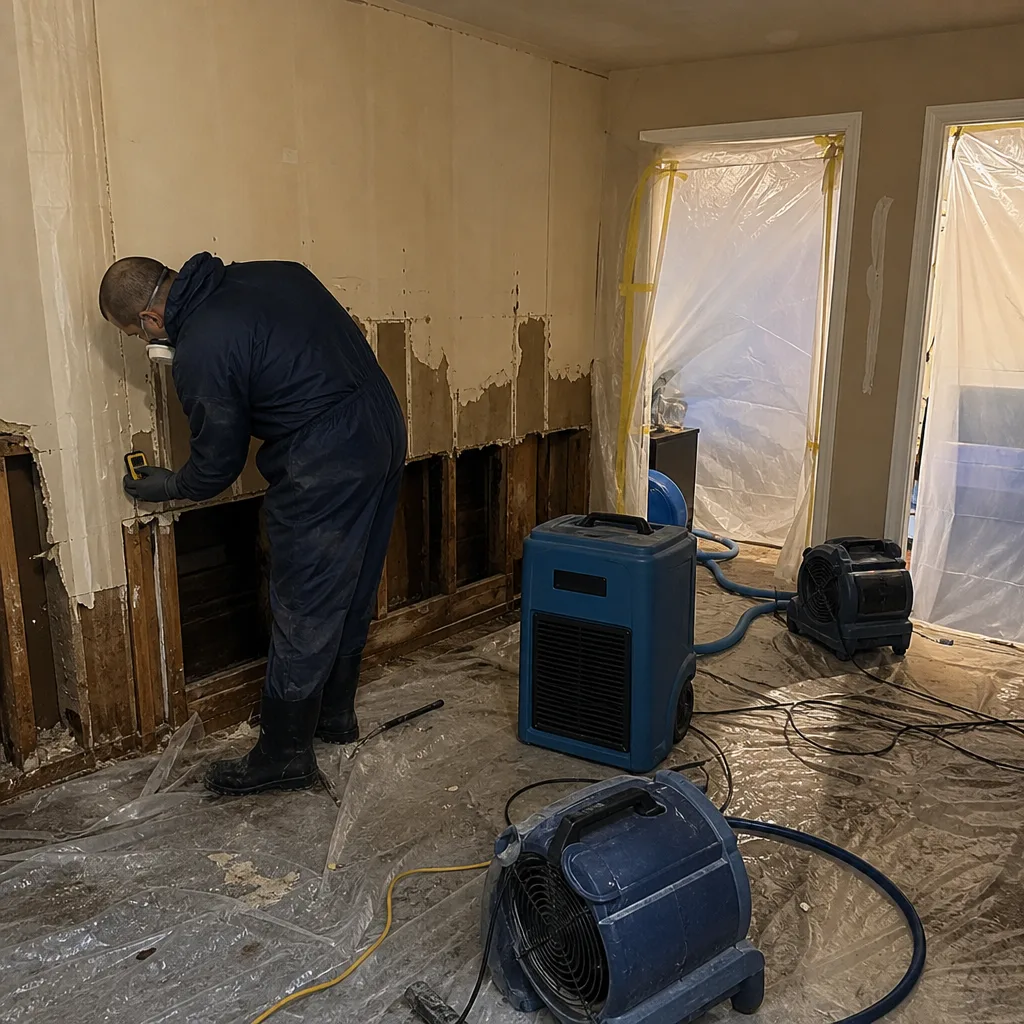 Before
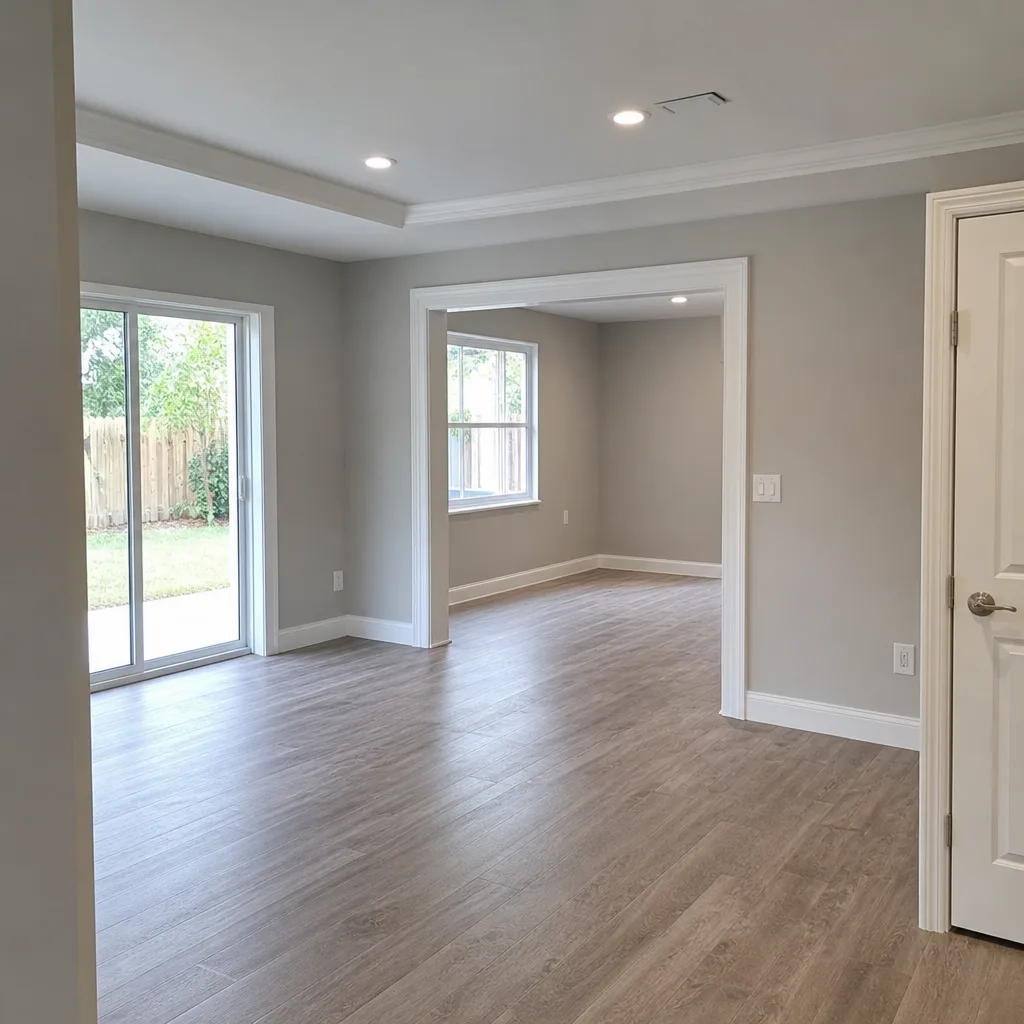 After
After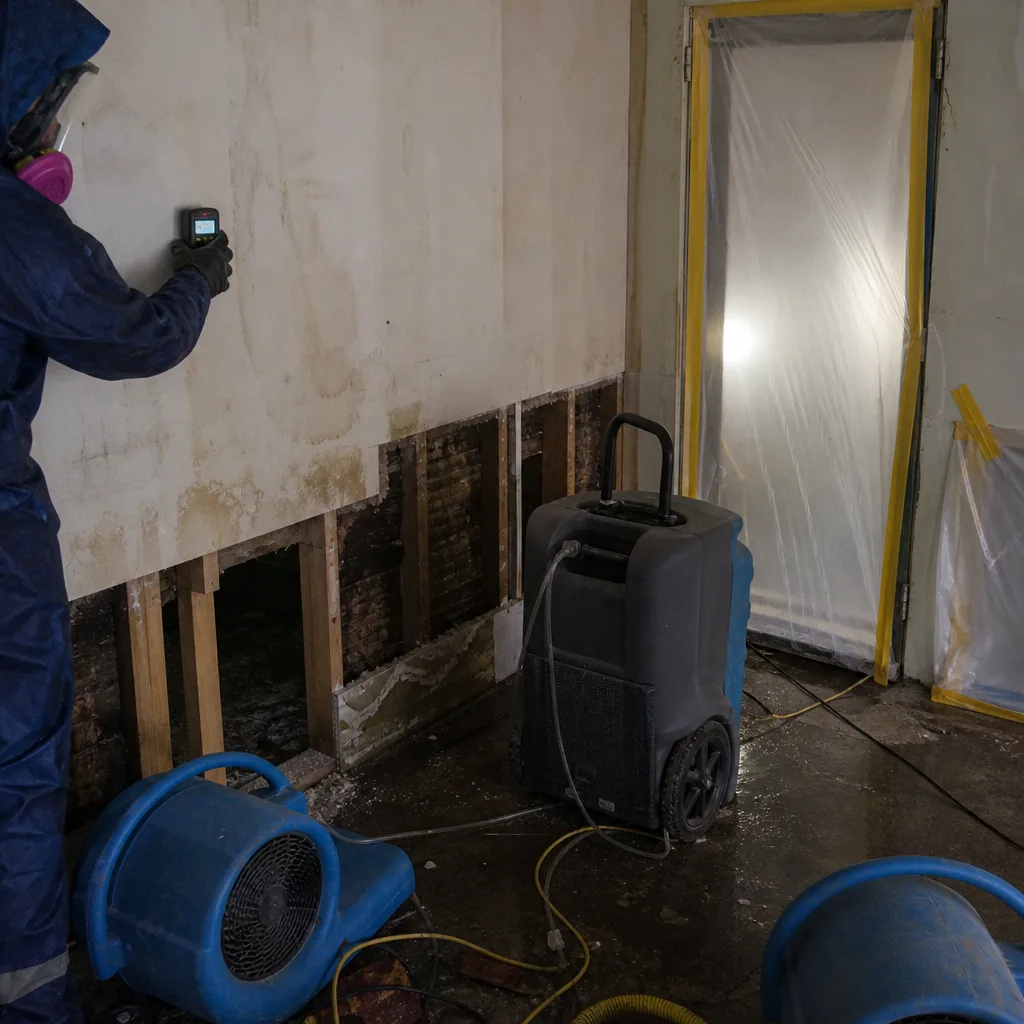 Before
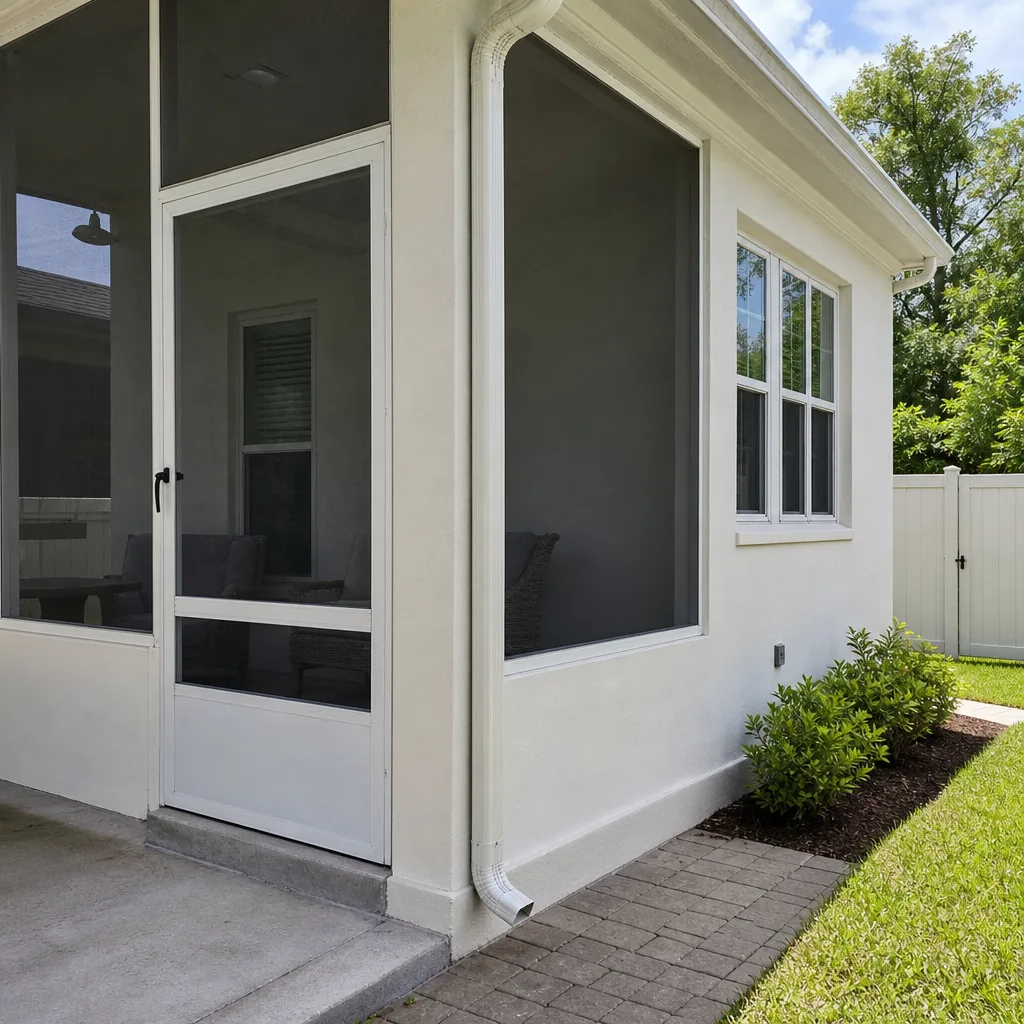 After
After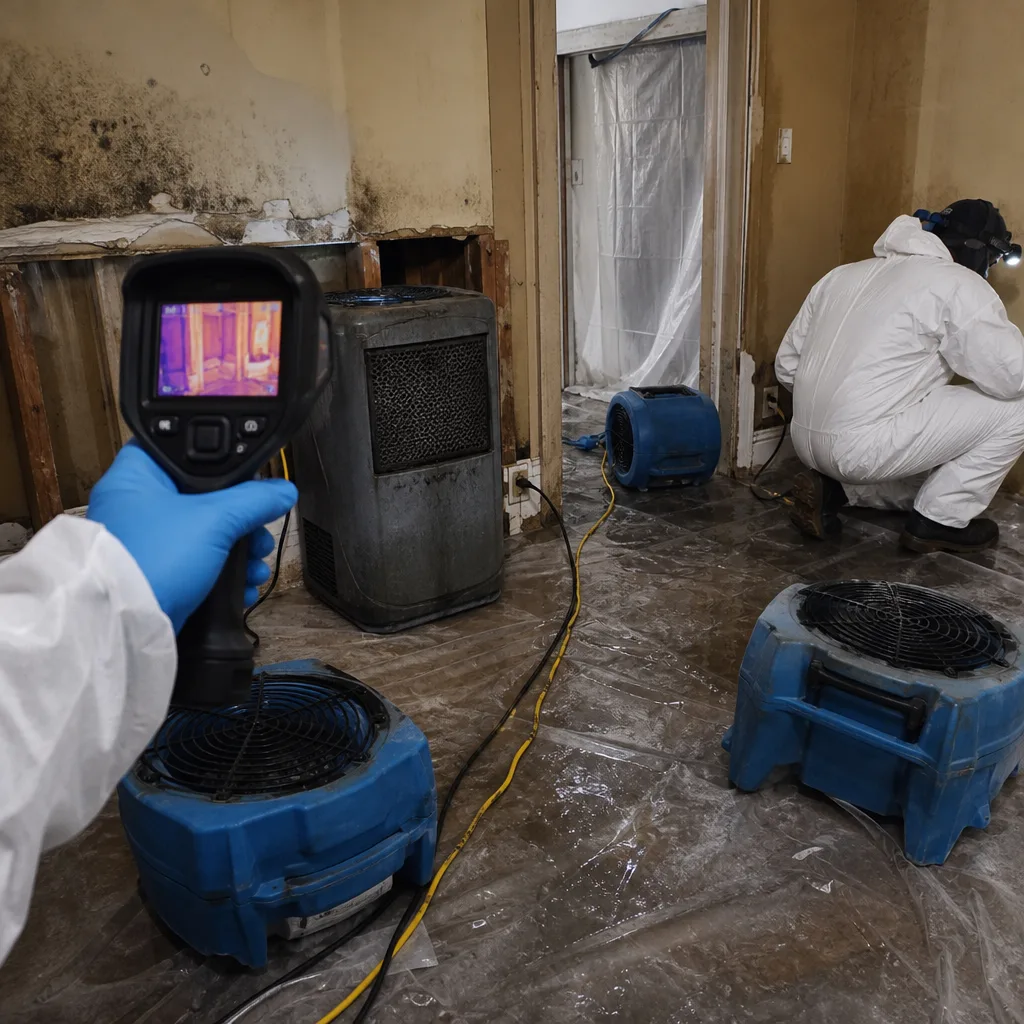 Before
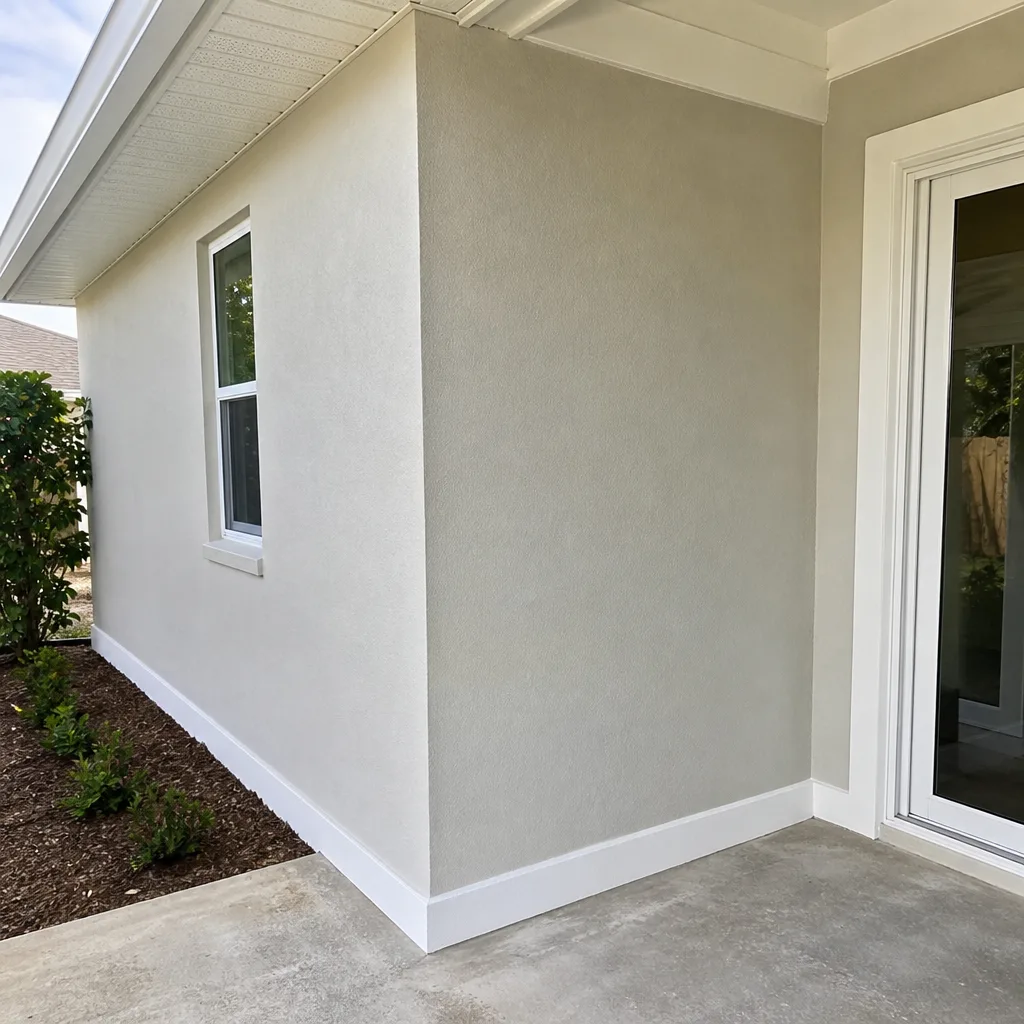 After
AfterWhen to Call a Professional
If you’re dealing with water damage, fire damage, or mold and the scope involves structural repairs, electrical work, or plumbing, the permit determination should come from a licensed contractor who knows Hillsborough County’s thresholds. For help deciding, see our DIY vs Professional Damage Restoration: The Tampa Homeowner’s Decision Guide. If you’ve discovered unpermitted work on your home from a prior owner, a professional can assess the correction scope and handle the retroactive permit process. If you’re buying or selling, the permit audit and any necessary corrections should be handled before the transaction closes. Keegan Restoration Tampa offers free estimates in Tampa, call (850) 367-1316.
Frequently Asked Questions
Most water damage restoration work that involves structural repairs, electrical work, plumbing, or costs exceeding $1,000 requires a permit in Florida. Pure mitigation work, like water extraction and drying with professional equipment, typically does not. The permit requirement kicks in when reconstruction begins.
Search your address on the Hillsborough County online permit portal, which lists every permit filed for the property going back decades. Look for permits matching the dates and scope of any restoration work, and check that each permit shows a final inspection and “closed” status.
The 50% rule requires that if repair costs equal or exceed 50% of a structure’s pre-damage value in a FEMA flood zone, the entire building must be brought into full compliance with current floodplain regulations, which often means elevation. This rule applies in low-lying Tampa neighborhoods including Seminole Heights and Palma Ceia.
In Florida, the licensed contractor of record is legally responsible for pulling the permit in their own name. A contractor who asks you to pull the permit yourself is shifting liability to you and should be avoided. The permit should name the contractor, not the homeowner.
Yes. Unpermitted work creates title issues that can block a sale entirely, or force you to pay for retroactive permitting and code corrections before closing. Buyers in competitive Tampa markets regularly walk over unpermitted repair histories.
Insurance companies can deny or reduce claims for unpermitted work, especially when the work is later reclassified as an upgrade rather than a repair. Permitted work with closed inspections creates a paper trail that supports your claim and protects your payout. If you’re unsure about your situation, call (850) 367-1316 and we’ll help you figure out the next step.
The Bottom Line
Florida’s post-Ian building code environment means restoration permits are no longer a formality. They’re legal requirements with real consequences for insurance claims, resale, and code compliance. Hillsborough County’s $1,000 threshold and Florida’s 50% rule create two distinct triggers that Tampa homeowners need to understand before work starts. The contractor of record should pull the permit in their own name, every time. And the permit history audit, done before buying or selling, is the cheapest insurance you can buy against inheriting someone else’s unpermitted work. If a prior owner skipped the permit, fix it now, because the problem only compounds with time.
Written by Shane Pruitt, Owner at Keegan Restoration Tampa, serving Tampa since 2005.